

The general NYC requirement
In New York City, apartment entrance doors and stairwell doors in multiple dwellings are required to be self-closing, so they close on their own after someone passes through. The city has stepped up enforcement and penalties after deadly fires where open doors let smoke spread through buildings.
For the exact current rules, check with the NYC Department of Housing Preservation and Development (HPD), the FDNY and the Department of Buildings, or ask your building's counsel. We make the doors close and latch reliably; we do not give legal opinions.
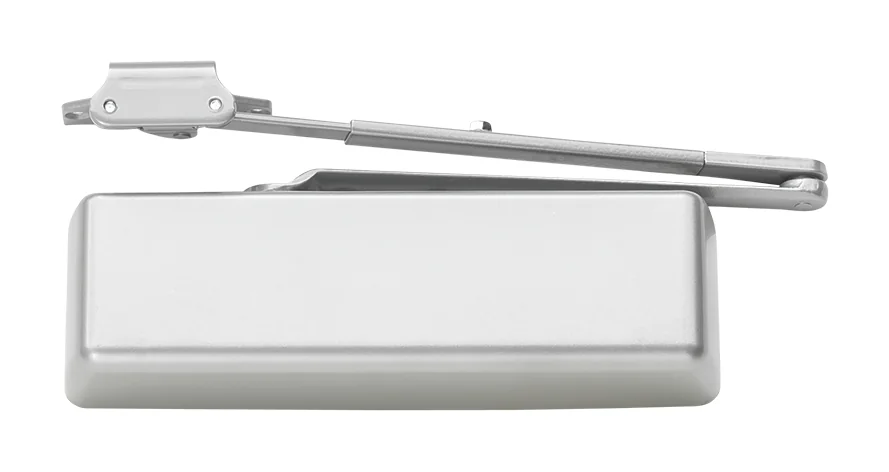
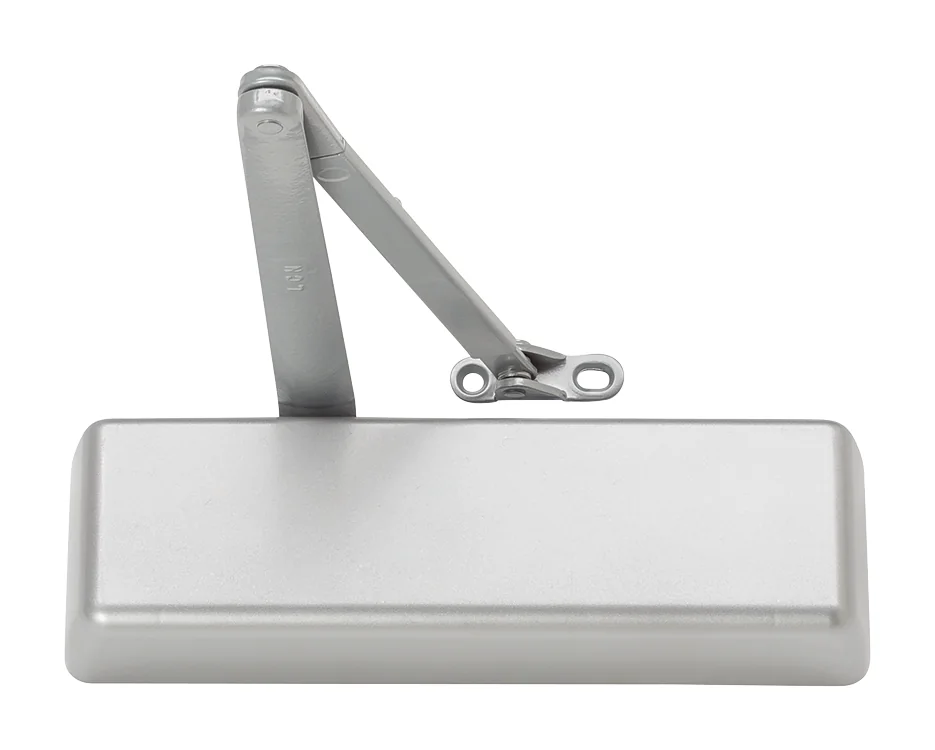
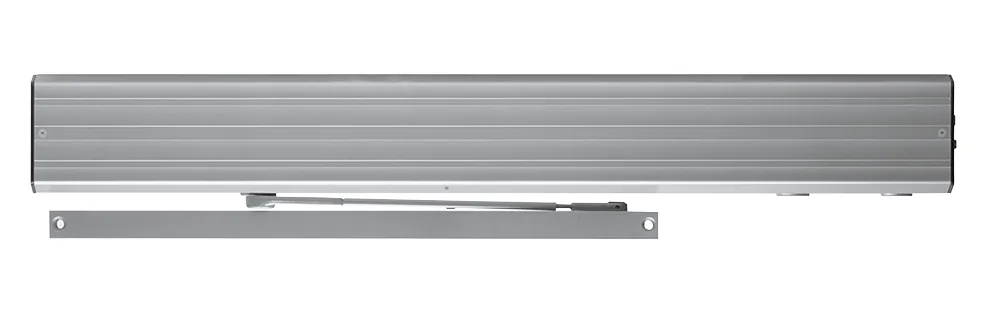
Product images: manufacturer marketing materials.
Closer types
- Surface closers: mounted on the door or frame with an arm; the most common on apartment, stairwell and service doors.
- Concealed overhead closers: hidden in the frame header; common on aluminum storefront doors.
- Floor closers: set in the floor under pivoting doors, often on glass entrances.
- Auto operators: powered openers for accessible entrances, usually with push buttons or wave sensors.
How a closer should be set
- Sweep speed: the door should close at a controlled pace, not slam and not crawl.
- Latch speed: the last few inches should have enough push to latch the door every time.
- Backcheck: cushions the door when it is thrown open, protecting the frame and hinges.
- Opening force: for accessibility, the 2010 ADA Standards set a maximum of 5 pounds of force to open interior hinged doors (fire doors are treated differently). Exterior doors and fire doors need enough force to close and latch.
Fire doors and hold-opens
- Fire-rated doors must close and latch to do their job. Wedges, hooks and kick-down stops defeat them.
- Where a building needs certain doors open during the day, use hold-open devices that release on the fire alarm, installed to suit the opening and approved where required.
- A leaking closer (oil on the floor or door) has lost its fluid and needs replacement, not adjustment.
More
See commercial door closers, floor closer repair, commercial door hardware, hollow metal doors and buildings, boards and supers. We install and service LCN closers, among other lines.